Since the mid 20th century, at least, savvy trans travellers have had a few stereotypes about certain international destinations.
“When a trans person said they were going to Thailand, you asked, ‘When’s your surgery date?’” says Kayley Whalen, an anthropology Ph.D. student at University of California Davis. “Scandinavia and specifically Denmark was also a place people went to be around trans people or to transition.”
Danish painter Lili Elbe was one of the first known recipients of gender-affirming surgery, undergoing experimental procedures in Germany in 1930 and 1931, while the first widely recognized, successful gender-affirming surgery was performed on American Christine Jorgensen in Denmark in 1952. Both women became well known enough to give Denmark a glow. Meanwhile, the first gender-affirming surgery was performed in Thailand in 1975, and within a couple of decades the Southeast Asian country had become a global hub for gender-affirming surgery.
In the 21st century, many countries provide high-quality gender-affirming surgery, which may or may not be a priority for trans travellers. Though Thailand and Denmark are still highly regarded places to visit, many more destinations these days are considered trans friendly.
“I’ve had the opportunity to visit Sweden, Italy, Japan, Puerto Rico and Mexico,” says Gabrielle Claiborne, an Atlanta-based activist, speaker, business owner and chair of the IGLTA Foundation’s Gender Diverse Travel Advisory Group. “All of those experiences have been really affirming to me. There are destinations that understand that the human family is not as binary as what we once thought.”
Claiborne has felt “gawked at” in security lineups at various airports. But she found Japan to be a refreshing change. “They were looking at me because I’m a tall, blonde woman. That was unique to their culture.” Touring Japan, the obstacles to travel that she experienced were pretty much the same ones faced by many cis westerners. “In some situations there was a language barrier, and that made it a little bit more difficult to navigate things,” she says, “but for the most part, it was a pleasant experience.”
Brazil has also emerged as a trans-friendly destination, though travellers note that its trans-friendliness only manifests itself in certain regions, certain neighbourhoods and in particular circumstances.
“I felt very comfortable and enjoyed going out and enjoying nightlife in São Paulo,” says Whalen. “Carnaval? What trans person wouldn’t want to be at Carnaval. The worst that’s gonna happen is you’re gonna get pickpocketed. But all the Brazilians get pickpocketed, too.”
For Ami King, an American nomad and content creator from New Jersey, the northern city of Salvador felt not just trans-friendly but also Black-friendly. The city is informally known as “the Blackest city in the world outside of Africa.”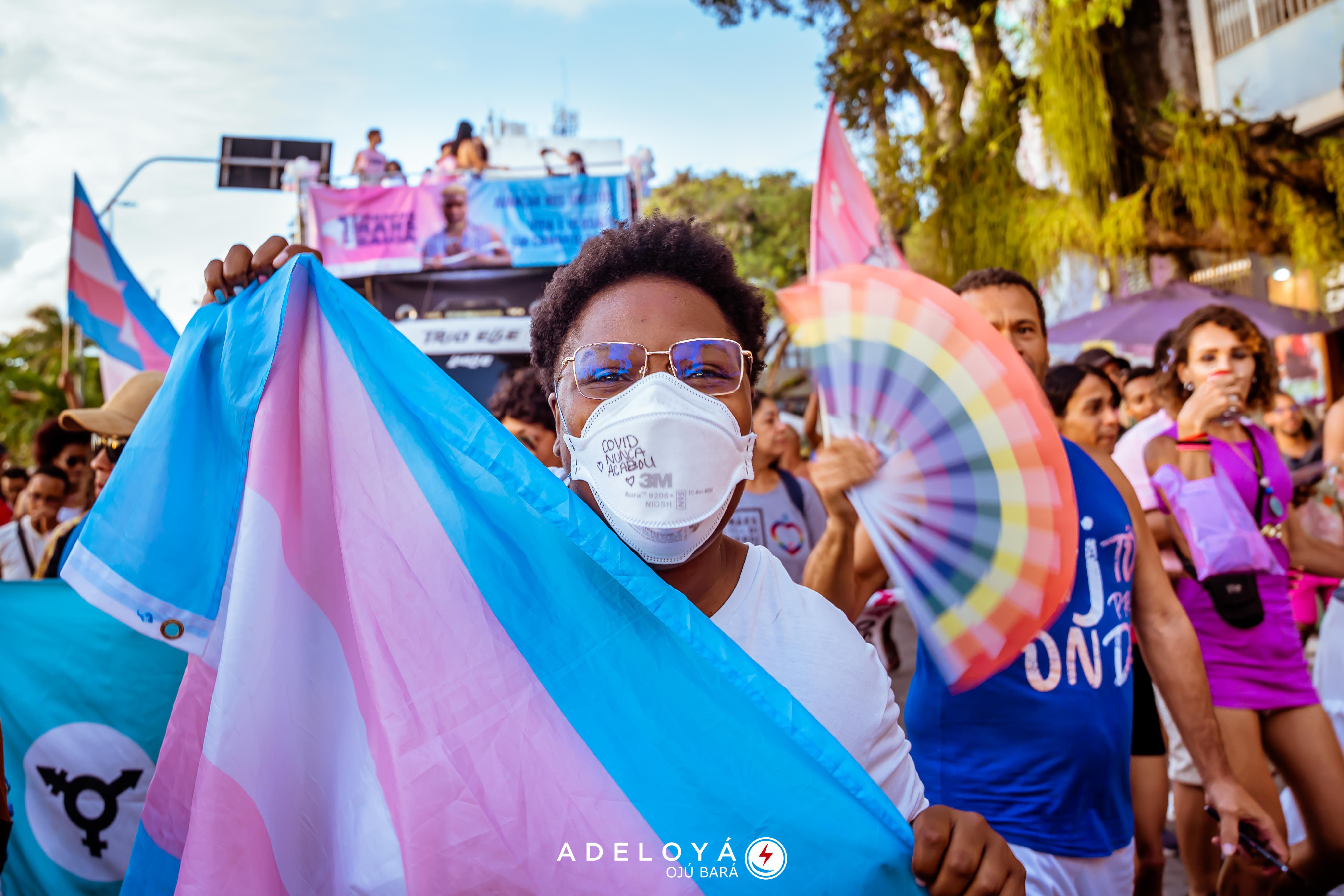
“I loved seeing Blackness reflected back to me and around me day to day,” says King, who has lived in 11 countries including Brazil. “More than that, I loved experiencing trans events there. It was one of my first times seeing so many Black trans people in one place outside of the U.S., and honestly in general.”
The openness and community-oriented mindset of Brazilian culture also struck a chord with King, who has purposely avoided the U.S. lately for its vehemently anti-trans rhetoric. “I loved the resistance, love and expression that lived in the DNA of a lot of what I saw and experienced there,” he says.
Yet trans travellers should take precautions when visiting Brazil. Although discrimination based on sexual orientation and gender identity has been a crime there since 2019, and trans people have many other legal rights, local attitudes tell a different story. Brazil has the highest documented murder rate of trans people in the world, according to the organization Trans Murder Monitoring. Of the 281 trans and gender-diverse people killed worldwide between October 2024 and September 2025, TMM reports that 80 of those murders happened in Brazil. The good news is that number has been dropping.
Sam Goldon, one half of the Alaska-based travel influencer duo @thegoldonqueers, says travellers need to research their destination before planning a trip. Avoiding danger and discrimination is important, but so is finding fun and enriching experiences. “We always like to research to find the local LGBTQ hot spots when we’re travelling abroad,” says Goldon. “In Bali we ended up at an LGBTQ+ Deaf drag theatre that was so incredible.”
Bali, too, required precautions. Though the Indonesian island has a reputation for being easygoing about sexual orientation, gender identity and gender expression—there are gay bars and drag shows—Indonesia’s national laws and policies are not trans friendly. “When my [driver’s] licence said ‘F,’ even though I was on T and had had top surgery, I shaved my face to travel and raised my voice at the security desk on the way to Bali,” says Goldon. “Because even though Bali itself is very trans-friendly, Indonesia as a whole is not.”
Australia really stood out to Goldon as the most trans-friendly destination they’ve visited. “We went there for World Pride in 2022 and there were a lot of murals and art on the streets that celebrated diversity in all its forms, including trans folks,” they say. “I remember hosts of different events calling out, ‘Where’s our trans family in the audience?’ and everyone cheering.” World Pride hosted a gender-expansive performance art event called Gender Euphoria Mighty Real. “I just remember weeping through the whole thing, feeling like until this Pride, I hadn’t seen myself fully represented.”
Even beyond World Pride’s embrace, Goldon felt comfortable in Australia. “I had just gotten top surgery and spent a lot of time with my shirt off there, and even in the more rural areas we visited, I never once felt unsafe,” they say. “The diversity and acceptance there was so heart warming.”
Yet some countries with a reputation for being pro-LGBTQ+ might have work to do on the T part.
“My partner is based in Berlin, so I spend about five months of the year in Germany, which most people assume is very trans-friendly,” says Adriana Roberts, a San Francisco-based performer, DJ and founder of the nightlife and music brand Bootie Mashup. “While I’m not saying it’s not, depending on your doctor, there are definitely a few things where it might feel like they are about 20 years behind. Especially when it comes to access to transgender health care and recognizing nonbinary identity.”
Roberts has experienced some awkwardness when seeking hormone replacement therapy (HRT) in Berlin. “In order to get approved for HRT there, you often have to ‘say the right words.’ Which is usually, ‘I feel like an ‘X’ trapped in a ‘Y’ body.’ Which is a very old and outdated mode of thinking,” she says. “But if you want the hormones, this is what you might have to say to get them.”
Of course, someone living in Germany is going to have a different experience than someone who’s just there on vacation, but there are times when trans travellers need to secure hormones during a visit. In Mexico, for instance, trans people can buy them at pharmacies without a prescription, usually at affordable prices, making the country a popular destination for trans Americans. Guadalajara and Mexico City, especially, have developed reputations as hubs of transness.
Thailand still continues to be a top destination for trans people worldwide, though the flights from North America can be pricey. Pattaya, a beachside city near Bangkok, is well known for its highly visible population of trans women, or “kathoeys.” “There are probably more trans people in Pattaya than anywhere else in the world,” says Whalen. “It’s a place with seedy red-light districts, and yet it also has the most prestigious trans beauty pageants in the world.”
The visibility and cultural acceptance of trans and gender-nonconforming people in Thailand does not mean that they have legal equality. “Under the surface, they’re still treated like second-class citizens,” says Roberts. For instance, Thai citizens still cannot legally change their gender. Roberts was once denied entry to a now-shuttered Bangkok nightclub called Insanity because her gender on her ID card at the time didn’t match her gender presentation.
“The club didn’t allow ‘ladybois’ in the club, because they assumed they were all sex workers preying on their customers,” says Roberts, who found the experience to be “disheartening.” “The bouncer was ready to just let us walk in until he saw my ID. He tried to be nice about it and apologized, but said that it was club policy.”
Experienced trans travellers often develop discreet ways of building community while abroad. It can be very subtle; Golden says that smiling eyes at someone who seems trans has led to hangouts while abroad.
Goldon says tourists often get more leeway—and so have less to fear—than locals in many countries. That can be an opportunity to demonstrate that trans people are everywhere. “My feeling is that we should show up cautiously, respectfully and visibly for those who need to see it,” they say, “flagging in a way only other queer folks would see, to show that no one of us is alone.”
This is one in a series of stories about travelling while trans. Read about how the travel industry treats trans people here.